International Self-Care Day: What Does Self-Care Really Mean?
How looking after the whole of ourselves can help us live well
post by Pause & Breathe co-founder Susie Hooper
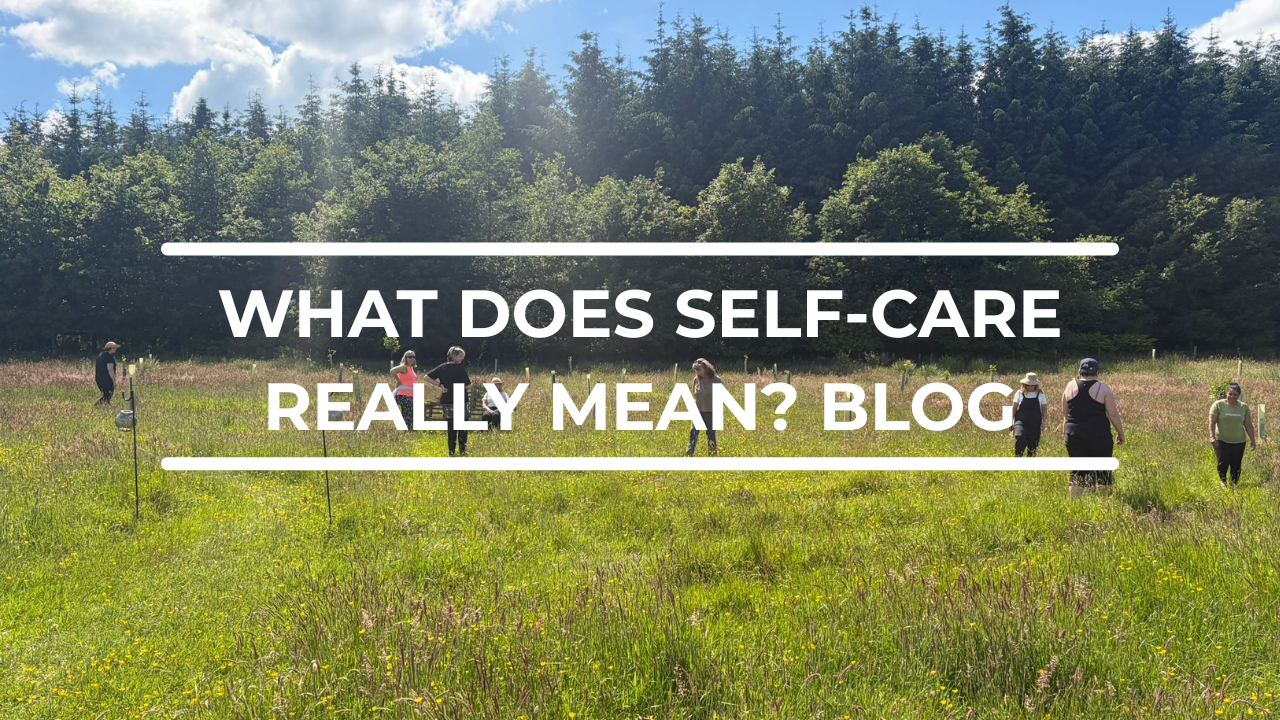
Photo of people walking an outside labyrinth on a sunny day
What is Self-Care?
When you hear the words self-care, what comes to mind? For many people it's a long bath, a favourite cup of tea, a walk in nature or an early night. For others it might be meeting a friend for coffee, taking a yoga class, spending time in the garden or sitting quietly with a good book. All of these are valid expressions of self-care, but none of them, on their own, tell the whole story.
As we mark International Self-Care Day, it's a lovely opportunity to pause and reflect on what self-care really means. It's a phrase that has become increasingly popular over the last few years, yet it can sometimes feel as though it's been reduced to a list of things we should be doing. In reality, self-care is far more personal than that. It isn't about following someone else's routine or trying to create the perfect balance. It's about learning to notice what helps us to stay well, recognising that those needs will change throughout our lives, our seasons and even from one day to the next.
The World Health Organisation describes self-care as the ability to promote health, prevent illness, maintain wellbeing and cope with life's challenges. I love the breadth of that definition because it reminds us that self-care isn't something extra that we squeeze into our week when everything else has been done. It's part of how we care for ourselves every day, helping us to live well rather than simply getting through.
Looking After the Whole of Ourselves
One of the things we often talk about at Pause & Breathe is that wellbeing is about the whole person. Physical health is certainly part of that picture. Moving the body, eating nourishing food and getting enough rest all make a difference. But wellbeing also includes emotional health, our relationships, our sense of purpose, our creativity and the opportunities we have to connect with ourselves and with other people.
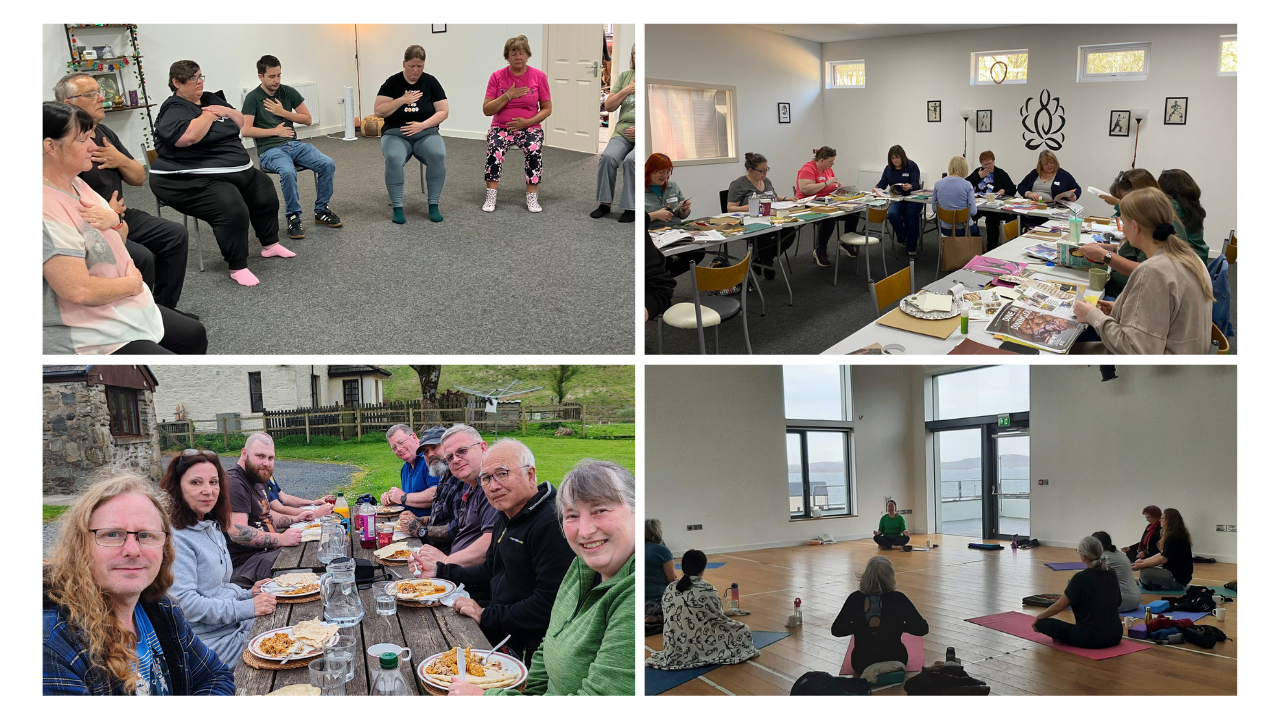
A collage of four photos: top left shows a chair meditation class - people have their hands on their heart centre and their eyes closed; top right is an arts class - people are cutting out from magazines to make a collage; bottom left people are sitting outside on picnic benches eating; bottom right is a yoga class on the Isle of Iona
That's why self-care looks so different for each of us. For one person it might be swimming every week because they notice how much lighter they feel afterwards. For another it might be taking time to paint, spending an hour in the garden, walking through the woods or sitting quietly with a mindfulness practice. Sometimes self-care means saying yes to something that brings joy. At other times it means saying no to something that would leave us feeling depleted. The important thing isn't the activity itself, but whether it responds to what we genuinely need in that moment.
Perhaps one of the most helpful questions we can ask ourselves isn't, "What should I do for self-care?" but rather, "What do I need today?" That question invites curiosity rather than judgement. It acknowledges that our needs aren't fixed, and that listening to ourselves is one of the greatest acts of self-care we can practise.
Rest and Self-Care Aren't the Same Thing
Over the last few years, I've spent a lot of time exploring the importance of rest. It's become one of my greatest passions, not because I think rest is the answer to everything, but because so many of us have forgotten how to do it well.
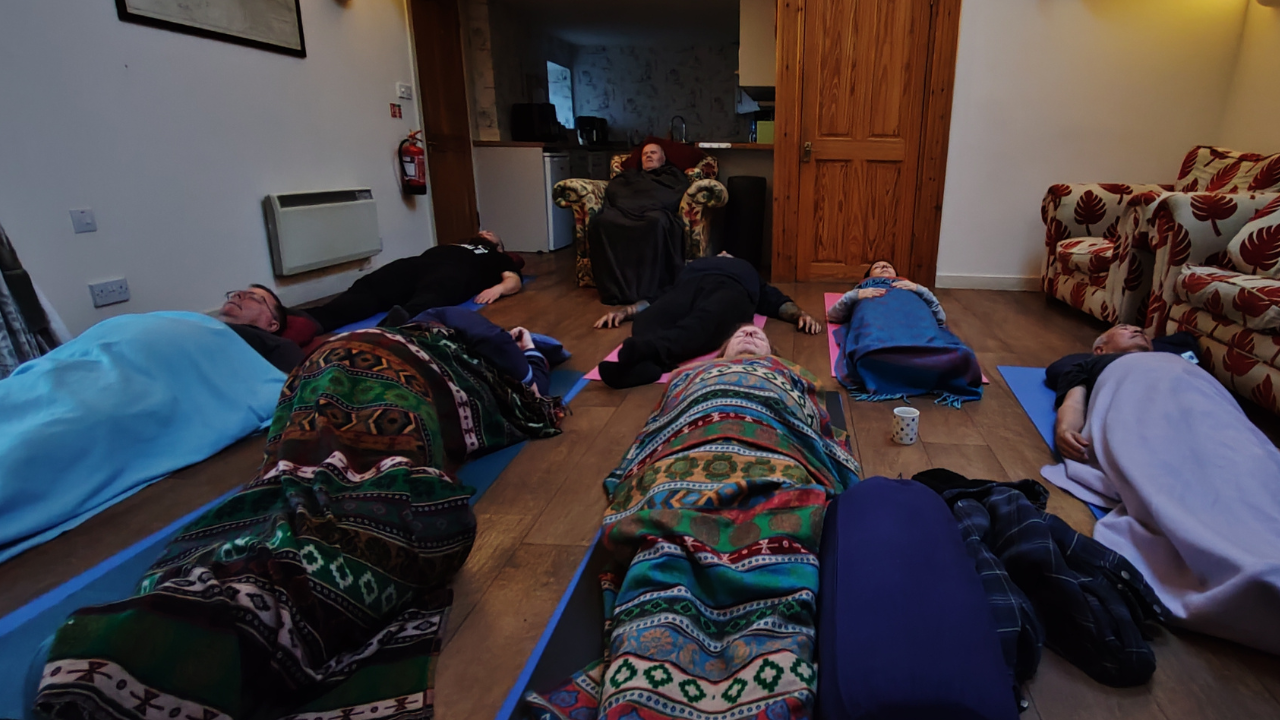
People lying down during a Yoga Nidra session on retreat on the Isle of Mull
Through that journey, I've come to realise that while rest and self-care are closely connected, they aren't the same thing. Sometimes the most caring thing we can do is rest. Sometimes it's getting outside for a walk, meeting a friend, moving the body, creating something with our hands or having a difficult conversation we've been avoiding.
Self-care isn't about always choosing the quiet or comfortable option. It's about listening closely enough to know what is needed in this moment. Rest is one part of that picture, but it isn't the whole picture. The real practice of self-care is learning to respond to ourselves with honesty, compassion and wisdom, even when the answer changes from one day to the next.
Listening Before Life Shouts
Our bodies and minds are often wiser than we realise. They usually give us little signs when something is out of balance. We might notice we're becoming more tired than usual, finding it harder to concentrate, feeling overwhelmed more quickly or losing enthusiasm for things that normally bring us joy. These aren't signs that we've failed; they're often gentle invitations to pause and pay attention before life is forced to slow us down.
Learning to notice these quieter signals is, in itself, an important self-care practice. Rather than waiting until we're completely exhausted or overwhelmed, we can begin to respond with kindness when the first signs appear. Sometimes that's all self-care is: listening carefully enough that we can respond before the whispers become shouts.
What Self-Care Means to our Community
One of the reasons I love asking our community questions is that the answers are never the same. They remind us that there isn't one right way to practise self-care, because we're all different. We each have our own personalities, responsibilities, challenges and things that help us feel well.
Laura describes self-care as "filling up my inner tank." Before deciding what to do, she asks herself what she actually needs. Is it rest? Fun? Relaxation? Laughter? Human connection? Time in nature? Exercise? That simple act of checking in with herself helps her respond to what is needed, rather than automatically carrying on.
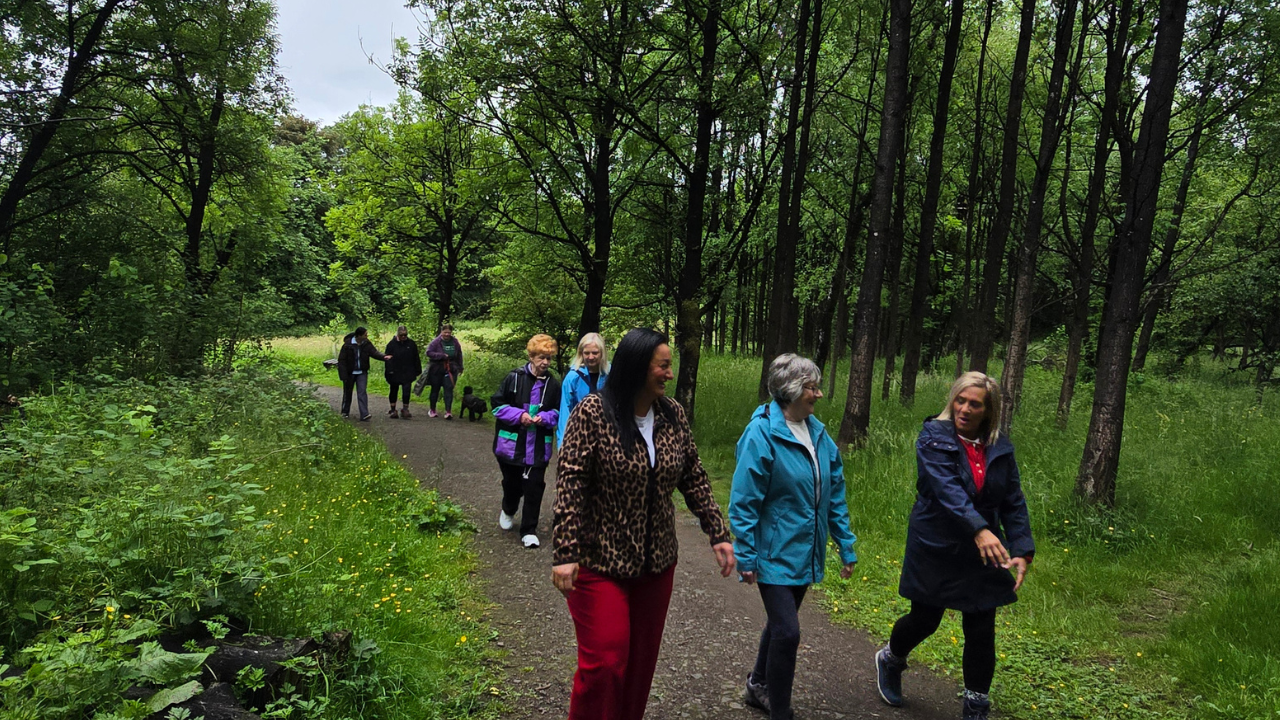
A group of people on one of our Wellbeing Walks in Bonnybridge Nature Reserve
She also recognises something many of us can relate to. When life gets busy, it's often self-care that disappears first. Other people's needs begin to take priority and our own quietly slip down the list. Yet, as Laura reflects, if the tank is empty then not only do we suffer ourselves, but we also have less to give to the people around us. She has learned to recognise the physical warning signs when her energy is running low, knowing that the longer they are ignored, the louder they become. For Laura, self-care isn't selfish. It's an essential part of daily life.
Christine's experience offers another important reminder. She enjoys swimming, walking, dancing, painting and listening to relaxing music, all of which help her stay physically and mentally well. But when she reflected on her own self-care, she noticed something she hadn't fully appreciated before. Many of the things that restored her energy were solitary activities.
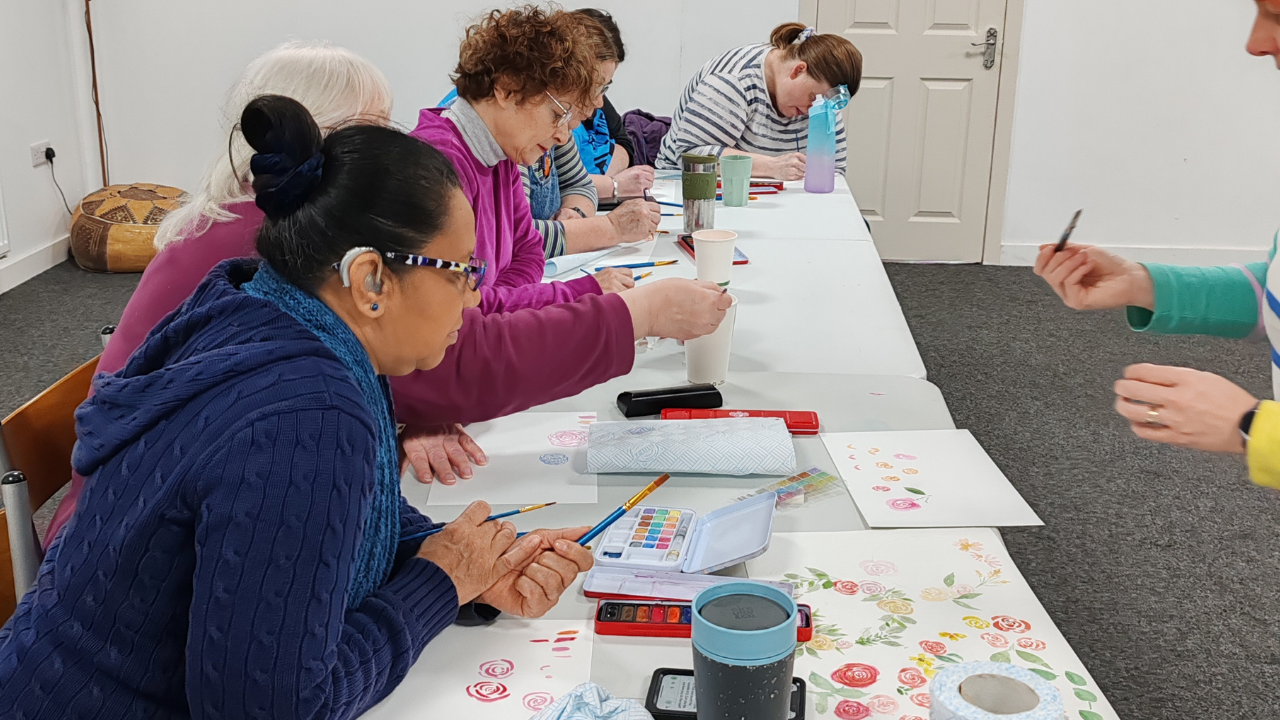
A watercolours session in our Bonnybridge centre
Rather than seeing that as a problem, she became curious about what was missing. She realised she needed more opportunities to connect with other people, so she now makes a conscious effort to put social activities in the diary. If she doesn't, she knows she's unlikely to go. I love that level of self-awareness because it reminds us that self-care isn't static. It evolves as we learn more about ourselves and notice what helps us to flourish.
Self-Care Isn't Another Thing to Get Right
Social media can sometimes leave us believing that self-care has to look a certain way. Perfect morning routines. Green smoothies. Ice baths. Meditation streaks. Colour-coded journals. While all of these things may genuinely support some people, they aren't a measure of how well we're looking after ourselves.
There is no gold star for doing self-care perfectly. There isn't a checklist that we all have to complete before we can say we've done enough. Some weeks self-care might mean exercising regularly, preparing nourishing meals and making time for hobbies that bring us joy. Other weeks it might simply mean asking for help, cancelling plans, going to bed earlier or giving ourselves permission to rest. Both are valid. Both are ways of caring for ourselves.
Perhaps one of the greatest gifts we can give ourselves is letting go of the idea that self-care has to look impressive. More often than not, it's found in the small, ordinary choices we make every day. Choosing to pause before saying yes to another commitment. Taking ten minutes to sit in the garden. Picking up the phone to a friend. Going for the walk we know will help clear our mind. Listening when the body asks for rest instead of pushing through one more task.
An Invitation to Pause
As International Self-Care Day invites us to reflect, perhaps the question isn't, "What more should I be doing?" Instead, maybe it's worth asking, "What already helps me to feel well?" There may be things that have quietly slipped away over the years as life became busier. There may be something you've been meaning to return to for months. Or perhaps there is one small thing you could do today that would help you feel a little more like yourself.
At Pause & Breathe, we believe there are many different paths to wellbeing. For some people it's yoga or mindfulness. For others it's creativity, nature, movement, conversation or simply finding a quiet moment with a cup of tea. The activity itself matters less than the intention behind it. Self-care isn't about escaping life. It's about creating the inner resources that help us engage with life more fully.
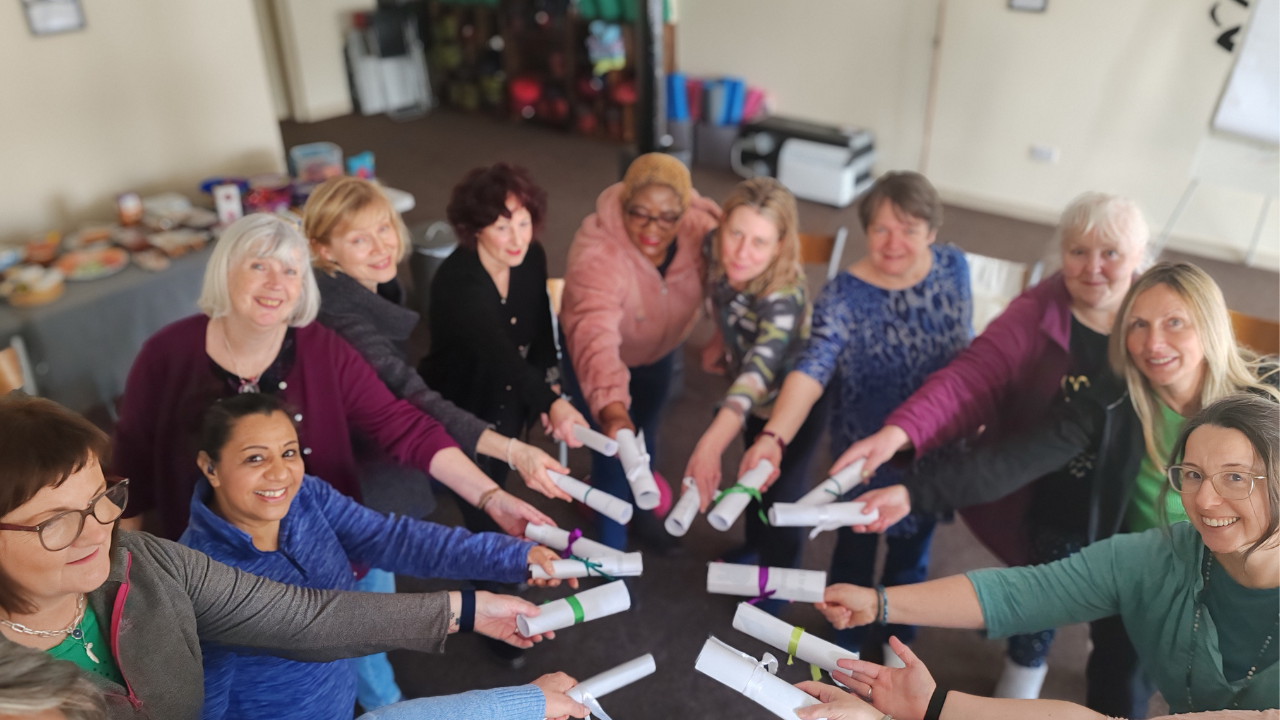
A group of women holding certificates and smiling in our old Bonnybridge Centre
So today, perhaps take a moment to pause and ask yourself a simple question.
What does self-care mean to you?
There isn't a right answer.
It may be different tomorrow than it is today.
The invitation of International Self-Care Day isn't to copy someone else's idea of self-care. It's simply to become a little more curious about your own.
What do you need today?
This blog was written by Susie Hooper - one of the founders of Pause & Breathe, and our CEO. Although rest is one of her big loves, it’s just one of the ways she looks after herself. She is a regular wild-swimmer and sauna-user, walks her dog Phin every day - getting out into nature, reads for pleasure, catches up with friends and family when she can and tries to get movement and exercise into her life regularly. She has found that all of these are beneficial for her self-care.